Separate agreed actions from suggestions in meeting notes
A meeting harness should preserve uncertainty, resolve ownership and prevent duplicate tasks.

“We should probably ask Maya next week.” That sentence can become “Maya will deliver next week” in a careless meeting summary. The words are similar; the commitment is different.
A meeting-action harness should preserve that distinction. Its goal is a reviewed action record, not an impressive-looking task list after every call.
Decide what counts as an action
Define the fields before choosing the model: action, explicitly agreed owner, due date if stated, status and transcript evidence. Use separate statuses for agreed, proposed and unresolved.
If no owner accepted the task, leave ownership unresolved. If someone says “Friday”, use the meeting date and time zone to propose an interpretation for review rather than silently assigning a date when the context is ambiguous.
Keep the relevant transcript excerpt attached. A reviewer should not need to replay the whole meeting to discover why a task exists.
Connect extraction to review
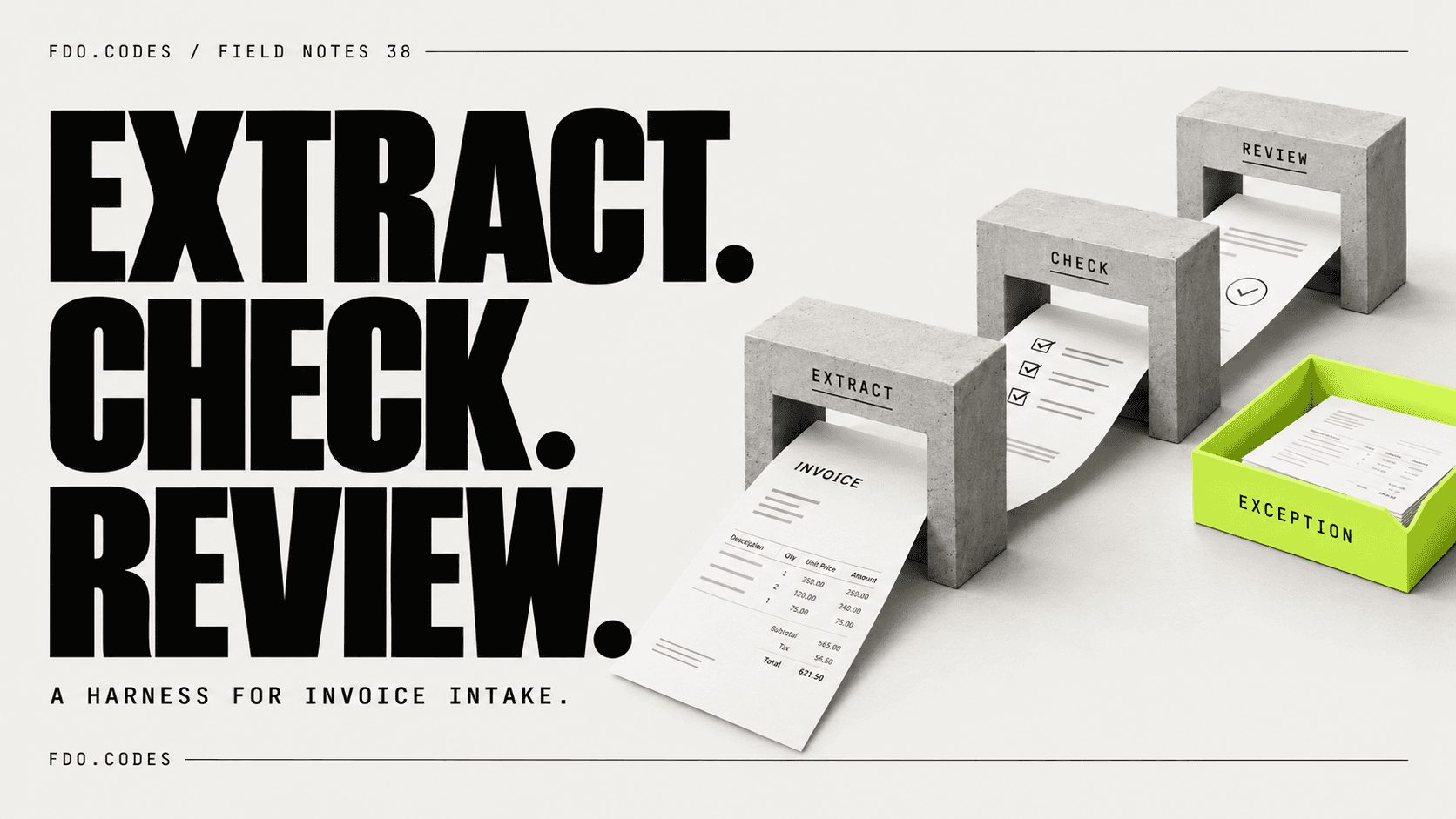
The visual workflow is: approved transcript arrives → extract action candidates → validate fields → route unresolved items to review → create only approved tasks. Use your organisation’s rules for recording, access and retention before connecting real meetings.
Human-review features in a workflow builder can pause a tool action for a decision. They are useful when turning extracted suggestions into changes in another system. See n8n’s human-review example.
The meeting chair or relevant owner should review the commitments. An automatically assigned task can create confusion even when it is technically easy to undo.
Plan for retries and corrections
Give each approved action a stable identifier linked to the meeting and source item. Check whether that identifier has already been written before creating a task. If a run fails halfway through, rerunning it should not create a second set of commitments.
Keep a correction route. If the owner or deadline changes during review, save that decision rather than asking the model to reinterpret the entire meeting until it produces the desired answer.
Test disputed language
Use a short fictional transcript containing a proposal, an explicit agreement, a rejected idea and a changed deadline. Decide the expected actions manually, then compare the workflow’s output. Count invented owners and dates separately from harmless wording differences.
This is a practical no-code harness when your transcript and task tools have suitable connectors. It still requires configuration, permissions and maintenance. The reliable target is consistent treatment of evidence and approval, not identical prose on every run. The most valuable output may be one agreed task and two clear questions.