Ask AI to build one working slice before the whole feature
Connect the interface, logic and storage for one realistic path before multiplying screens and features.
AI can generate the appearance of a large product quickly. Screens, routes and components accumulate. The difficult question is whether one real user action works from beginning to end.
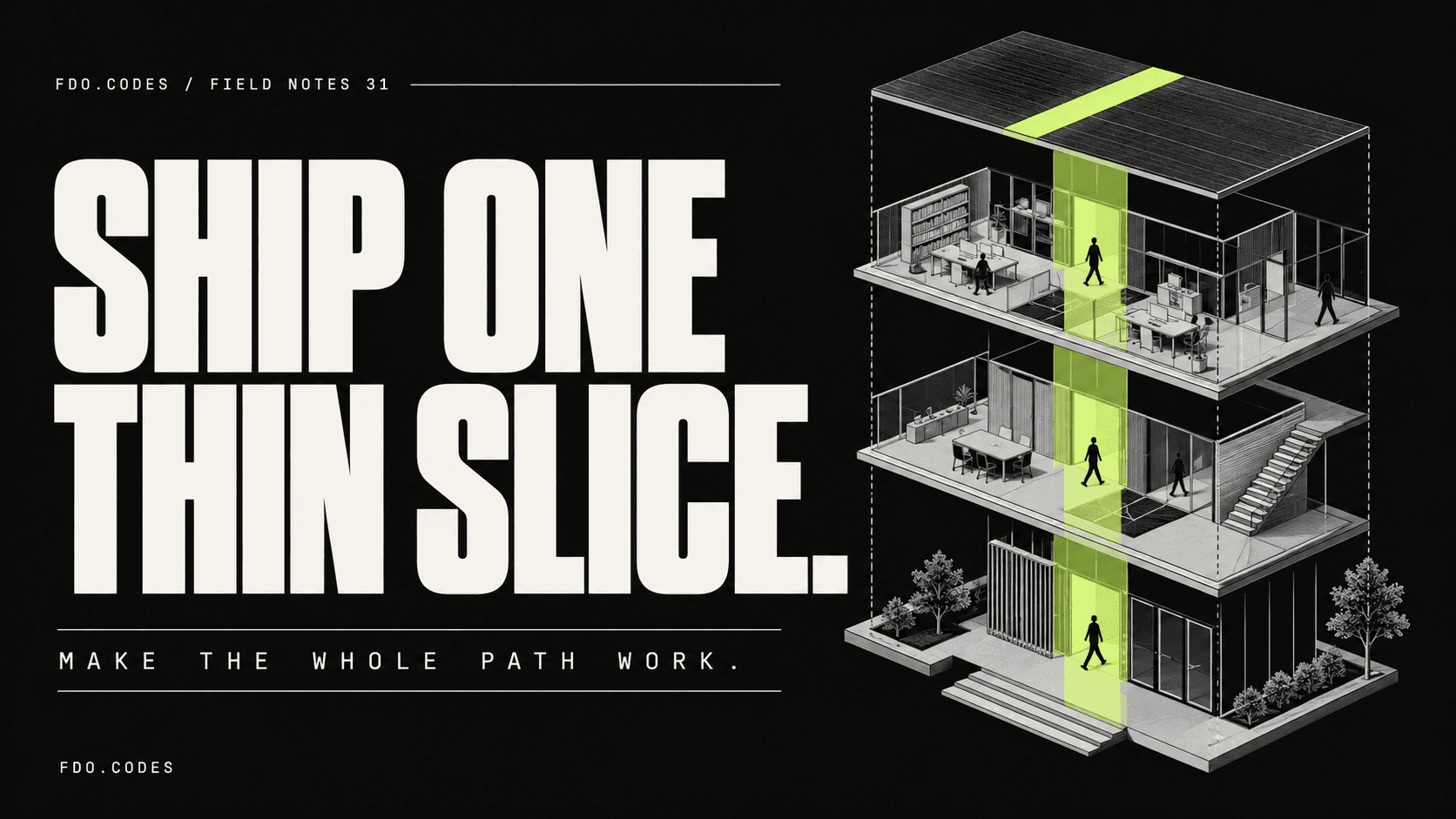
A useful coding tactic is to ask for a thin vertical slice: one narrowly scoped path through the interface, application logic and persistence. It should be small enough to review and real enough to expose integration problems.
Choose one observable outcome
Imagine a simple client portal. Start with “an authorised user can create one project and see it after a page reload”. That outcome connects input, validation, storage and retrieval. It is more informative than generating every dashboard screen before any data survives a refresh.
Write the acceptance checks first. What fields are required? What happens if the name is empty? Can another user see the record? What should a failed save look like?
Ask the coding agent to implement that path using the existing project conventions. Keep new dependencies and architectural changes justified by the slice, rather than by a speculative future roadmap.
Make temporary pieces explicit
Sometimes a prototype needs a mock service. That is fine if the mock is visible and the limitations are recorded. Do not call a workflow integrated when it is actually displaying local sample data.
Ask the agent for a short list of real integrations, temporary stubs and missing production work. If authentication is simulated, say so before anyone mistakes the demonstration for a deployable product.
Exercise the whole path
Run the action in the UI, reload the page and inspect the stored result. Test a relevant failure case. Automated checks can cover important behaviour, but seeing one success screen alone does not establish persistence, permissions or recovery.
Once the slice works, expand one dimension at a time: another field, an edit operation, a second user role. Each addition should preserve the working path you already verified.
This approach gives the agent feedback while the change is still understandable. It also gives a founder or product owner something meaningful to react to: a real outcome with visible tradeoffs.
For your next AI-built feature, replace “build the portal” with one end-to-end user action and a few checks. Measure time to a reviewed, working slice. A smaller first delivery can reveal the expensive assumptions before they spread through the rest of the product.