AI Literacy Starts With Everyday Decisions
Practical training helps people decide what to share, what to verify, when to act and when to stop.
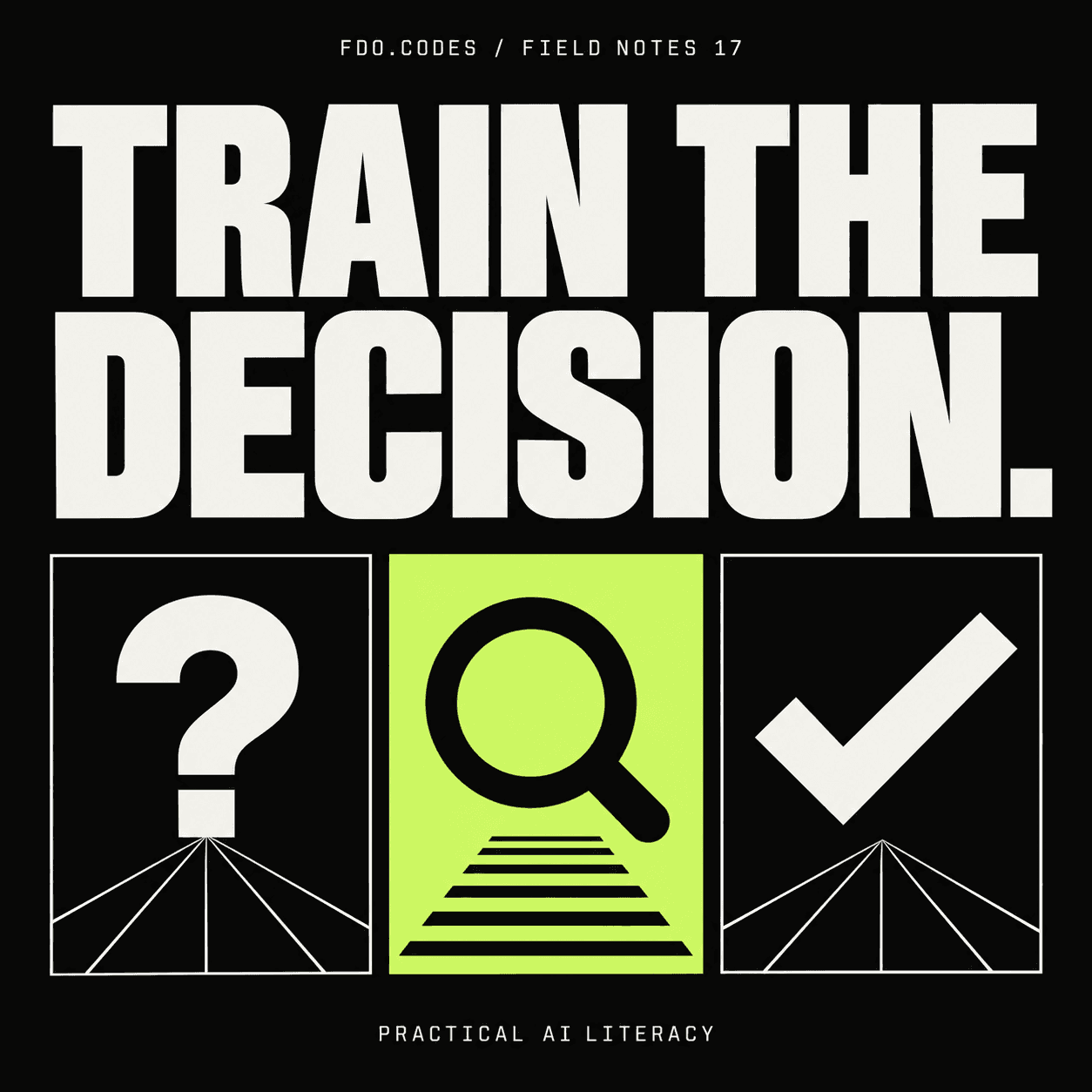
A team can become fluent at prompting while remaining uncertain about the decisions that matter most. Can this document be uploaded? Is the answer supported? May the agent send the message? What should happen when the result looks plausible but feels wrong?
I would build an AI training programme around those moments. Good judgement needs realistic practice, approved tools and an accessible route to help.
Teach the work people actually do
Give a sales team a proposal with an unsupported claim. Give an engineering team a generated change with a subtle permission error. Give an operations team a document containing instructions that conflict with the approved workflow.
Use synthetic or appropriately sanitised examples. Ask participants to identify the evidence, the data boundary and the action they are authorised to take. Let them practise stopping and escalating, as well as completing the task.
Training should reflect each role’s access and consequences. A person drafting internal notes needs different preparation from someone approving external communications or granting an agent access to production systems.
Make safe practice possible
Publish a short guide alongside the approved tool: allowed data, prohibited uses, verification steps, escalation contact and incident reporting route. Provide a sandbox where people can learn without affecting customers or live records.
Managers need training too. They decide how much time review receives and whether staff feel comfortable questioning an AI-generated result. A policy loses credibility when speed targets make its checks impractical.
The European Commission’s current AI literacy guidance describes context-sensitive measures that support staff and others operating AI on an organisation’s behalf. It does not prescribe one specific literacy level for every individual. Read the Commission’s AI literacy guidance.
Check decisions, then improve the programme
Completion rates show attendance. Short practical exercises reveal whether the guidance works. Can a participant spot a disclosure risk, challenge an unsupported answer and locate the reporting route?
Repeat relevant exercises after a significant tool or workflow change. Review recurring questions with the people maintaining the system. Confusion can be evidence that the interface or policy needs improvement.
The objective is confident, responsible use. Choose three realistic decisions from one team’s daily work and build the first session around them.