Human Oversight Needs Time, Context and Authority
A review step is useful when the person can understand the evidence, challenge the recommendation and change what happens next.
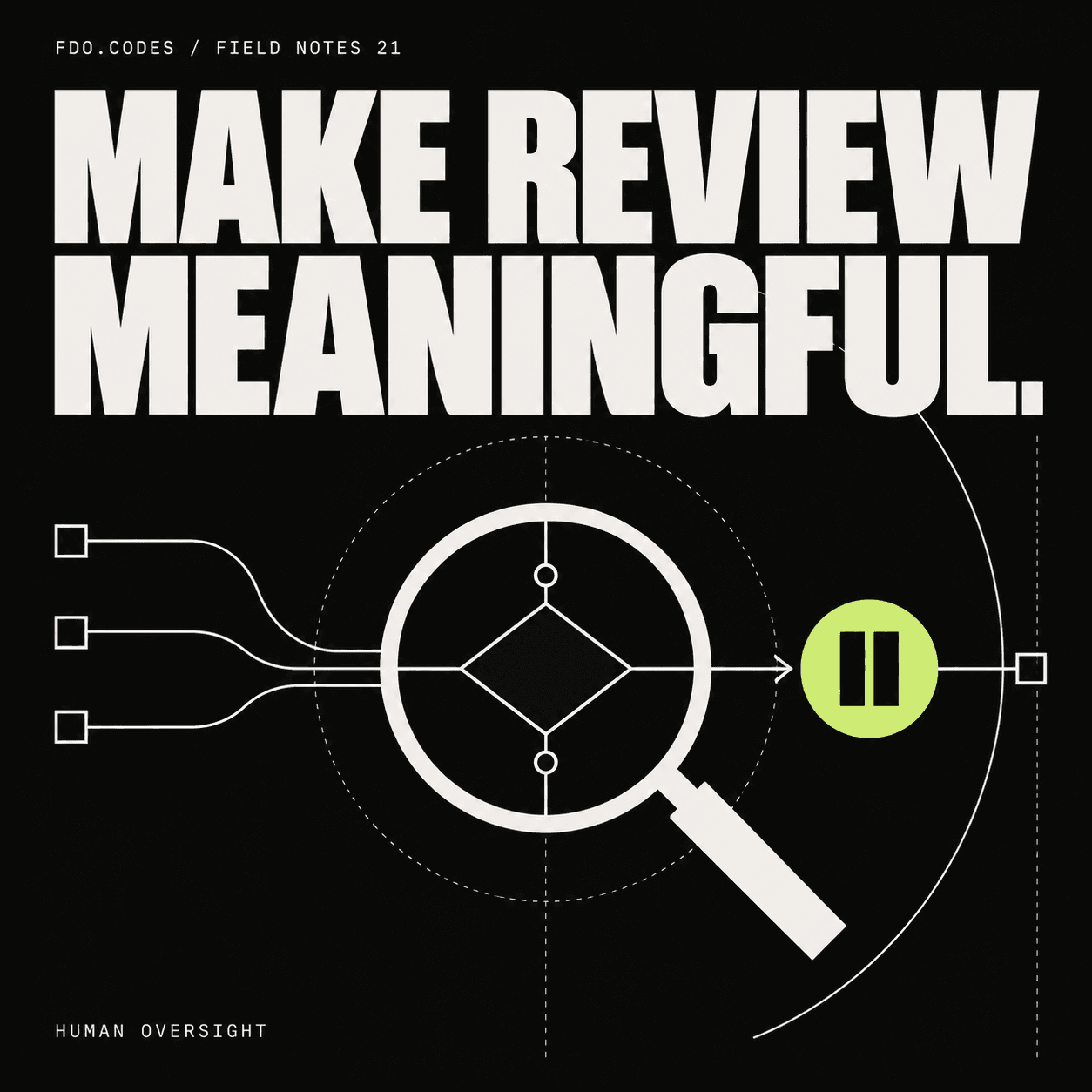
“A human will check it” can sound reassuring while concealing an unfinished design. Who is that person? What will they see? How much time do they have? Can they reject the proposed action without fighting the system?
I treat oversight as part of the workflow architecture. It needs a defined purpose and enough support to make a decision worthwhile.
Design the review around the consequence
A low-consequence internal draft and a consequential customer decision need different review arrangements. Decide which outputs need review, what triggers escalation and which actions should remain outside the agent’s authority.
The reviewer should see the proposed action, relevant evidence, material uncertainty and the changes the action would make. A generated explanation is not automatically proof that the underlying reasoning or sources are correct. Show the actual supporting records where access and confidentiality allow it.
For an illustrative account update, the review could show the current value, proposed value, source record and affected downstream process. A generic “approve” button provides less useful context.
Give reviewers a workable job
Train people on the specific failure modes they are expected to catch. Protect time for review and provide a route to specialist help. Let reviewers pause, reject or return work with a reason that can improve the system.
Measure review load as the service grows. If automation creates more cases than the team can meaningfully inspect, the original oversight design no longer matches the operation. Change the scope, capacity or controls before treating rushed approvals as evidence of safety.
NIST’s Generative AI Profile discusses risks including problematic human-AI configurations and provides risk-management actions for organisations. Read the NIST Generative AI Profile.
Evaluate the review step itself
Use representative exercises to check whether reviewers detect relevant errors and understand when to escalate. Inspect false alarms too: an exhausting stream of low-value warnings can undermine attention.
Record the decision and enough context for accountability, with appropriate limits on sensitive logging. Review recurring rejection reasons with engineering and the process owner.
For the next pilot, write a short reviewer brief before building the approval screen. Specify the evidence, expected decision, available actions and escalation route. Then test it with the people who will use it.