Who Owns the AI Between Demo and Delivery?
The AI Solutions Architect connects business decisions, system boundaries and operational ownership so useful prototypes have a credible route into daily work.
A convincing AI demo can leave a surprising number of decisions untouched. Who can use it? Which records may it read? Who accepts an incorrect action? Who maintains the integration after the pilot team moves on?
Those gaps are where I would start an AI architecture engagement. Sit with the people doing the work. Follow a case from arrival to completion. Find the handoffs, exceptions and decisions that the demo never encountered.
Give someone responsibility for the connections
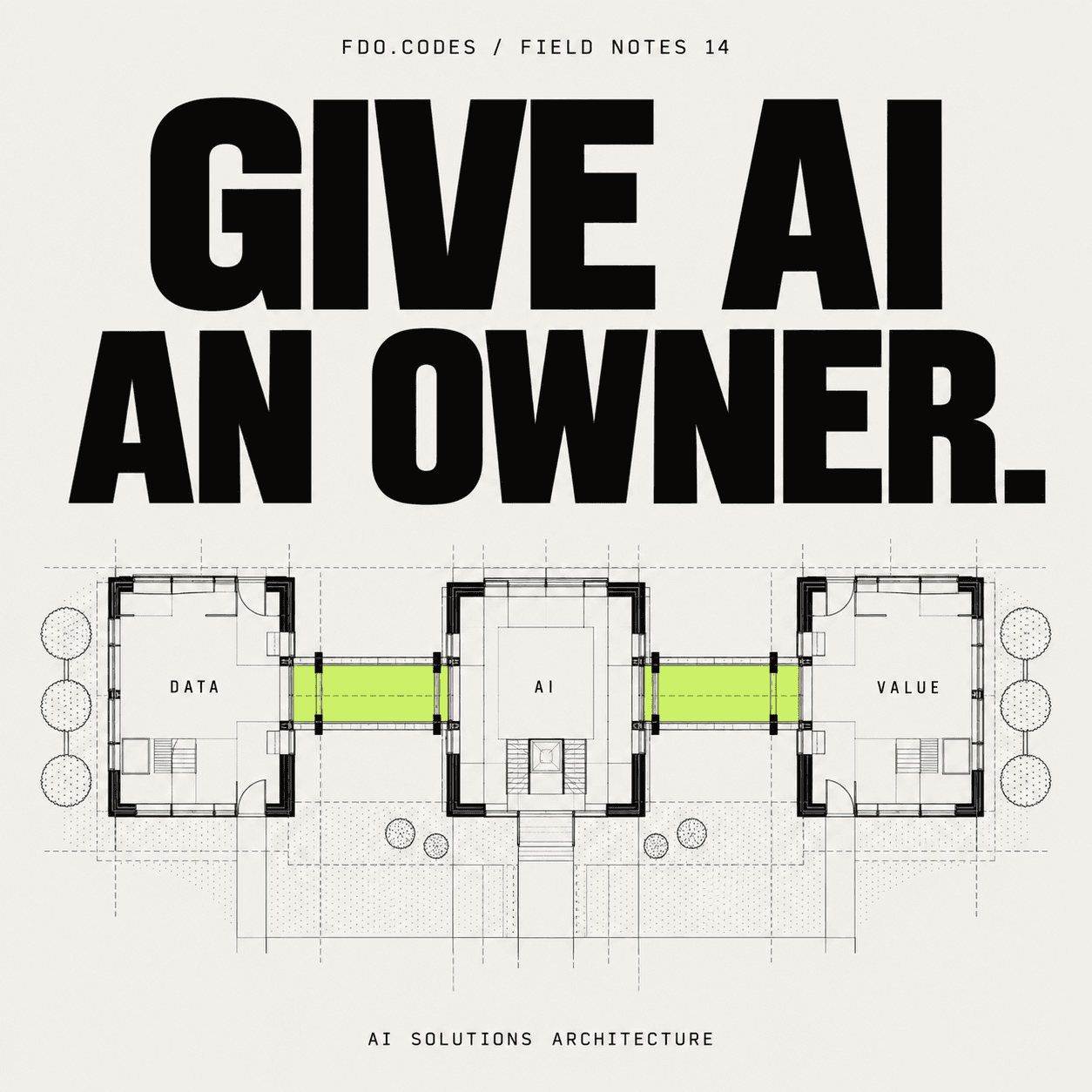
The AI Solutions Architect should connect the business process, data flows, model harness, security boundaries and operating model. The role needs enough technical depth to challenge a design and enough business understanding to explain its tradeoffs.
That person does not become the owner of every risk. The process owner still defines an acceptable outcome. Security, privacy and legal specialists retain their responsibilities. Engineering owns implementation and operation. The architect makes the dependencies and unresolved decisions visible, then brings the right people together to resolve them.
In a smaller company, this can be an explicit responsibility within an existing role or an embedded external engagement. A new title alone will not unblock delivery.
Make the first deliverable a decision map
I would begin with one page: the intended outcome, users, data sources, permitted actions, approval points, success measures and named owners. Add the conditions under which the system must stop or hand work back to a person.
Consider an illustrative support workflow. Finding an approved answer, drafting a reply and changing a customer’s account are different capabilities. They need different evidence and permissions. Treating them as one vague instruction to “resolve the issue” hides the important design decisions.
NIST’s voluntary AI Risk Management Framework provides a useful foundation for considering trustworthiness across design, development, use and evaluation. Read the NIST framework.
Test the ownership before scaling
Ask three people independently who can approve a new tool, change the acceptance threshold and pause the workflow. Conflicting answers reveal work to do before expansion.
My approach to embedded AI delivery is to connect these decisions with a working implementation. The result should be a system the business can understand, operate and improve.
Start this week by selecting one pilot and naming an accountable owner for every decision it can make.