Give your coding agent a failing example before asking for a fix
A reproducible failure turns a vague debugging request into a change you can evaluate.
“The filter is broken. Fix it.” A coding agent can respond to that instruction with a plausible change that solves a different problem from the one your user encountered.
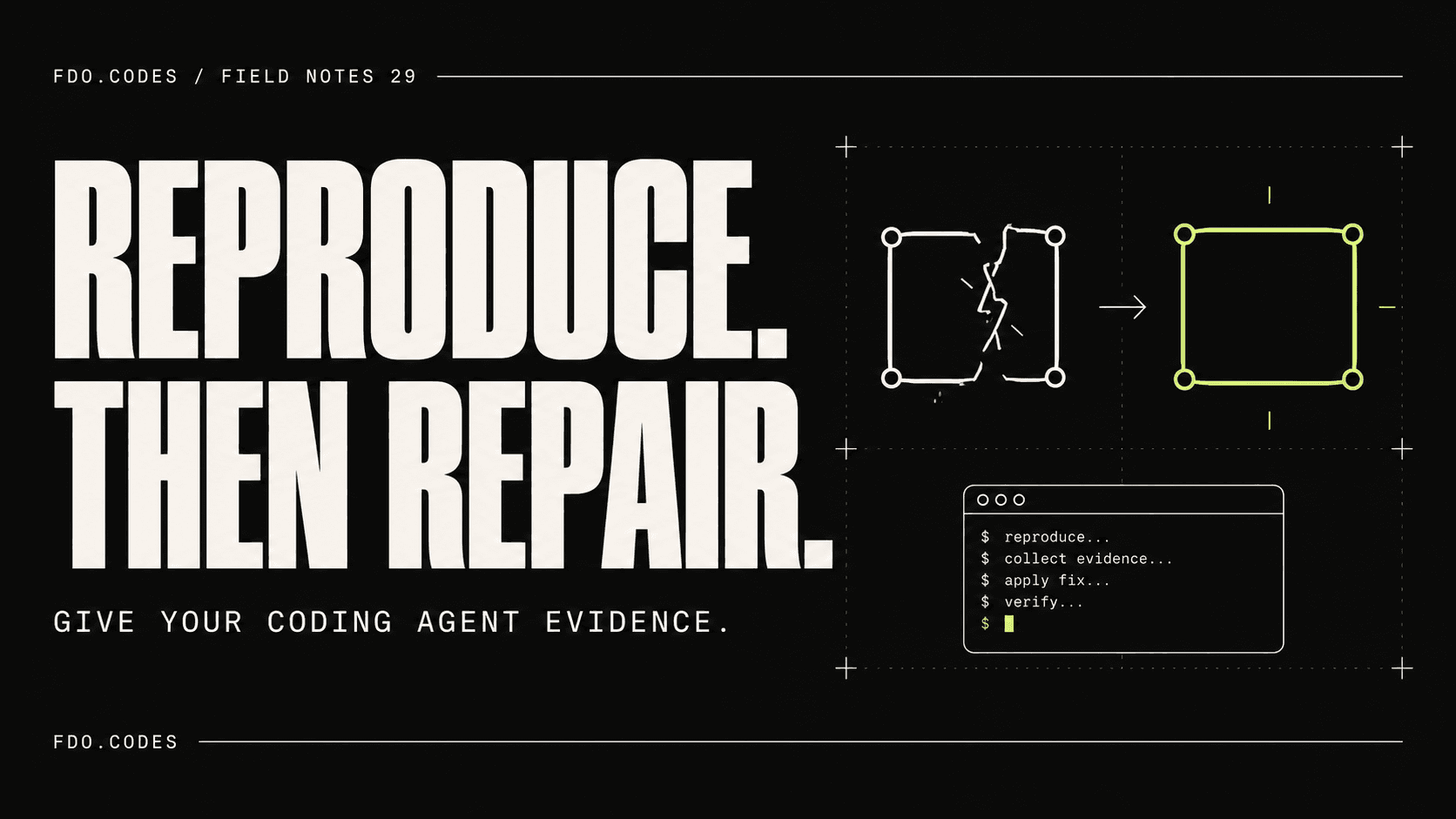
A better starting point is a small reproduction. Show the input, the expected behaviour and the observed failure. The agent then has evidence against which to check its work.
Write the failure in user terms
Suppose a product search should keep the selected category when a user moves to the next page. Instead, page two shows every category. Give the agent a short sequence: choose a category, move to page two, observe that the category filter disappears. State the expected result separately.
Use a local or staging environment with safe test data. Include the relevant route, a minimal example and any useful error output. Avoid pasting a whole production log full of unrelated records.
Ask the agent to reproduce the issue before changing the implementation. If it cannot, the first deliverable should be an explanation of what is missing, not a speculative rewrite.
Check the test before trusting the green result
Where an automated regression test is appropriate, make it fail on the original code for the right reason. A test that passes before the fix provides no evidence that the bug was repaired. A test that fails because the environment is broken provides the wrong evidence.
Review what the test asserts. Does it check the user’s visible result, or merely mirror the code the agent just wrote? Keep the test independent of incidental implementation choices where practical.
Then request the smallest change that resolves the failure while preserving the surrounding behaviour. A paging bug should not automatically trigger a redesign of the search system.
Ask for a short evidence bundle
The final handoff should state the reproduced behaviour, what changed, which checks actually ran and what remains unverified. Commands the agent suggests running are not the same as commands it executed successfully.
For a visual issue, a before-and-after screenshot may be more useful than a new unit test. For a data transformation, representative input/output examples may provide the clearest check. Choose evidence that matches the failure.
Anthropic’s agent guidance describes execution feedback as a way to check coding progress. The practical application here is narrow: turn the reported bug into observable evidence before accepting a repair. Read the engineering guidance.
Try this on the next small bug. Compare time to an accepted fix, including review and rework, with your usual “fix this” workflow.