Build a tomorrow brief that leaves your calendar alone
Use a read-only calendar and your own notes to prepare for the day without giving an agent control of it.
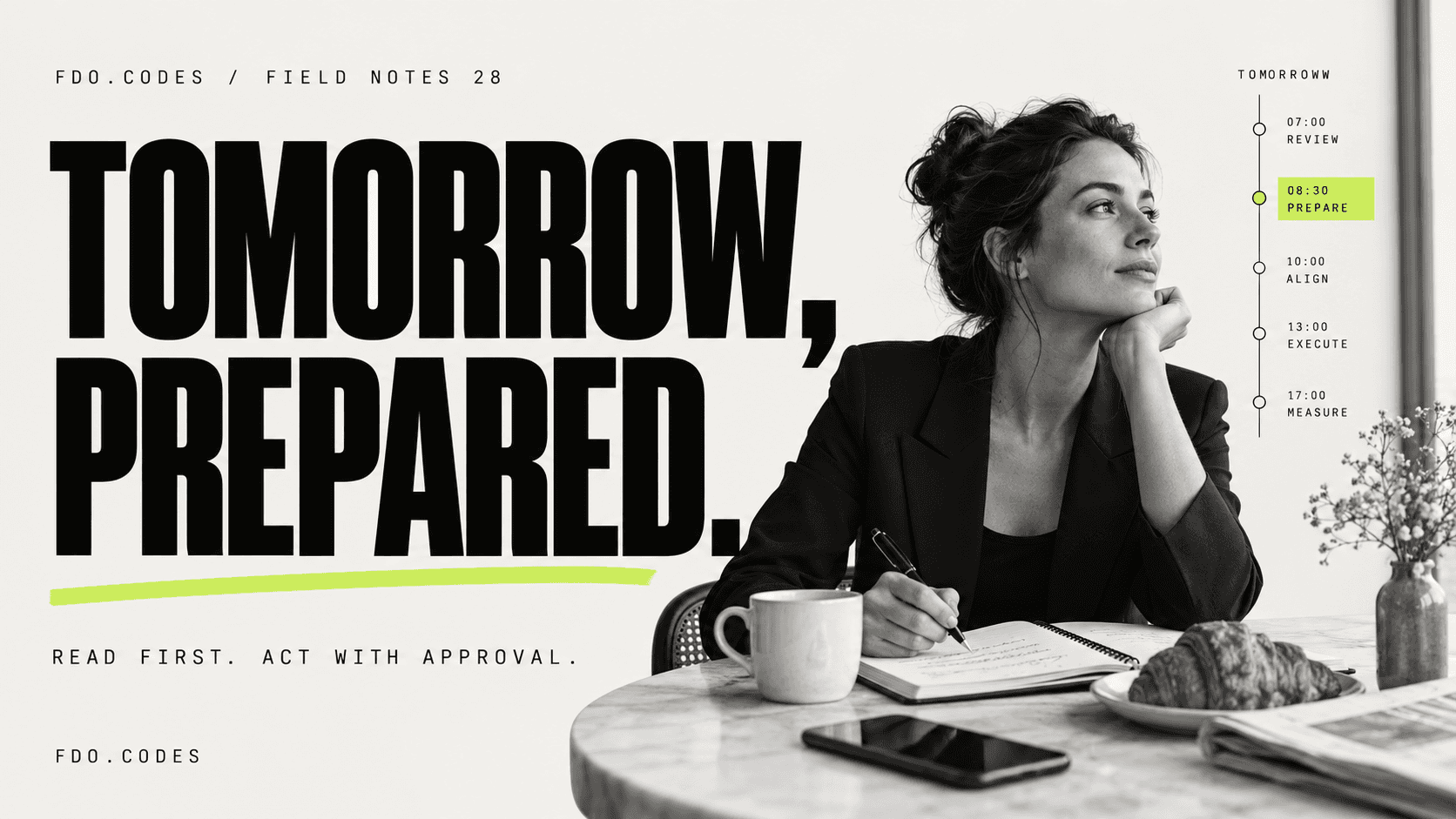
A calendar tells you where to be. It does not always tell you what to prepare. The gap between those two things is a useful place for a small AI workflow.
Imagine an evening brief that lists tomorrow’s meetings, the material you intended to read and the unresolved questions from your own notes. The first version can be read-only. It does not need permission to move meetings, contact attendees or make commitments.
Give it a narrow reading list
Select one calendar and one folder of relevant notes. For a personal trial, use invented meetings or your own non-sensitive commitments. At work, use approved tools and respect document permissions rather than copying everyone’s files into a shared prompt.
For each event, ask the model for the event title, time, linked preparation material and one possible preparation action. Require every action to name its source. If there is no agenda, the brief should say “no agenda found” rather than invent one from the meeting title.
The workflow might be: evening schedule trigger → tomorrow’s events → matching notes by explicit link or identifier → short brief → private notification. Start with explicit links; fuzzy name matching can attach the wrong person’s notes to a meeting.
Keep facts and suggestions apart
“Meeting at 10:00” is calendar data. “Review the proposal beforehand” is a suggested action based on the attached material. Display them differently.
Use the calendar’s time zone and handle all-day events separately. A date-only item should not turn into a midnight appointment. Avoid guessing travel time or other people’s availability unless you have reliable inputs for those specific tasks.
Inspect five ordinary days
Look for missing events, stale notes, duplicated preparation actions and incorrect time zones. Include a cancelled meeting and a recurring meeting with a changed time. The brief should reflect the current event record, not an older email invitation.
Measure whether it helps you arrive prepared, rather than how sophisticated the summary sounds. If five meetings produce five obvious suggestions, the workflow may need better source notes instead of a bigger model.
This is how I would introduce everyday AI: give it a limited job, reliable inputs and a result you can verify. Once the brief is genuinely useful, add an approval step for creating preparation tasks. Calendar changes can remain a separate, explicitly approved action.