A Governance Scorecard for the AI Leadership Team
Use a compact view of value, reliability, control and adoption to decide which AI services to expand, improve or retire.
Leadership needs a way to see whether AI is improving the business and whether the organisation can control it. A count of licences, experiments or generated tokens answers only a small part of that question.
I would use a compact scorecard for each important workflow, with a named business owner and a regular decision meeting. Keep the measures understandable and connected to an action.
Show value and the cost of achieving it
Start with the accepted business outcome: a completed case, a reviewed change or a useful customer response. Compare the end-to-end result with an agreed baseline, including review and rework.
Show total operating cost with its main drivers, alongside the cost per accepted outcome. Separate released capacity, service improvements and verified cash savings. Record the assumptions so a change in volume or case complexity does not masquerade as improved performance.
Keep a view of the cases where the workflow does poorly. A healthy average can hide unacceptable results for a particular group, input type or exception path.
Show whether the controls operate
Useful questions include: Are permissions current? Have consequential action boundaries been tested? Can the service be paused? Are evaluation results still representative? Are unresolved incidents or expired exceptions accumulating?
Keep the evidence behind each answer accessible. A green status chosen by intuition is less useful than a dated test, a named owner and a clear acceptance criterion.
NIST’s voluntary AI Risk Management Framework supports integrating risk management into the design, use and evaluation of AI systems. A leadership scorecard can make selected responsibilities visible in regular operating decisions. Read the NIST framework.
End the meeting with a decision
For each service, choose an action: expand, maintain, improve, restrict, pause or retire. Assign the next piece of evidence and the person responsible for it. Review adoption and staff feedback alongside technical measures; an unused tool may have a workflow problem that another model will not solve.
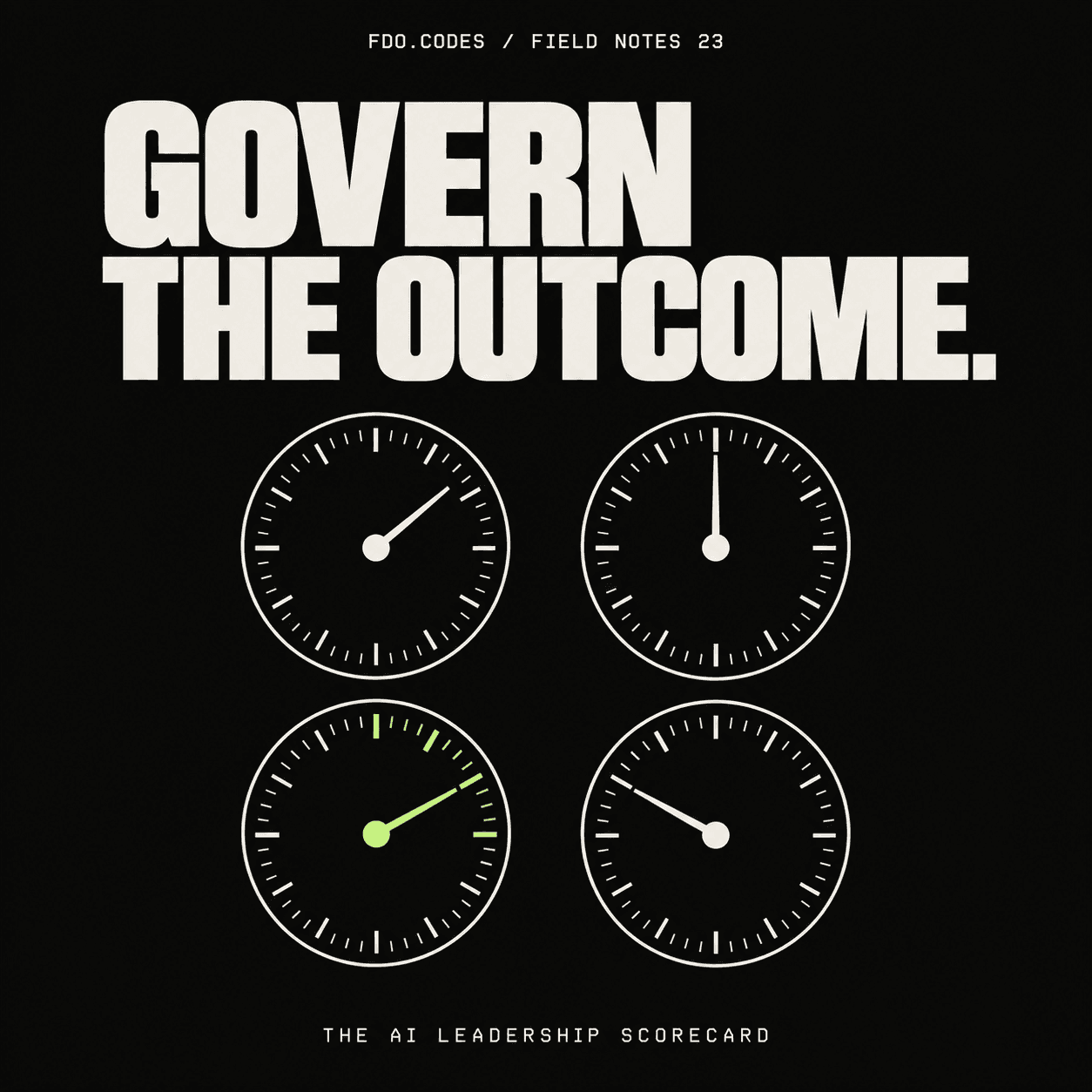
I would start with four areas: business value, reliability, control and adoption. Choose a few meaningful measures in each, with thresholds appropriate to the use case. Avoid combining everything into a single reassuring score that hides a critical failure.
The goal is a leadership rhythm that connects strategy to operational reality. Bring one live AI workflow to the next management meeting and ask what evidence would justify its next stage.